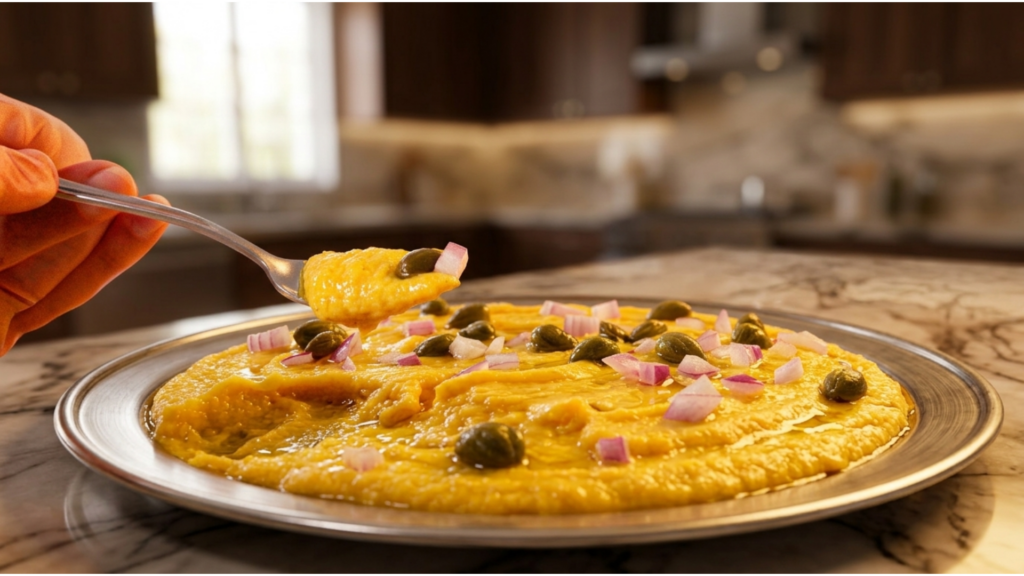
If you’ve ever visited Greece, you may have come across Greek Fava, a wonderfully smooth and creamy yellow split pea purée that’s a favorite in traditional Greek cuisine.
Despite its name, Greek Fava isn’t made with fava beans, but with yellow split peas. Slowly cooked with onion, carrots, garlic, and olive oil until tender, then blended into a silky, velvety purée.
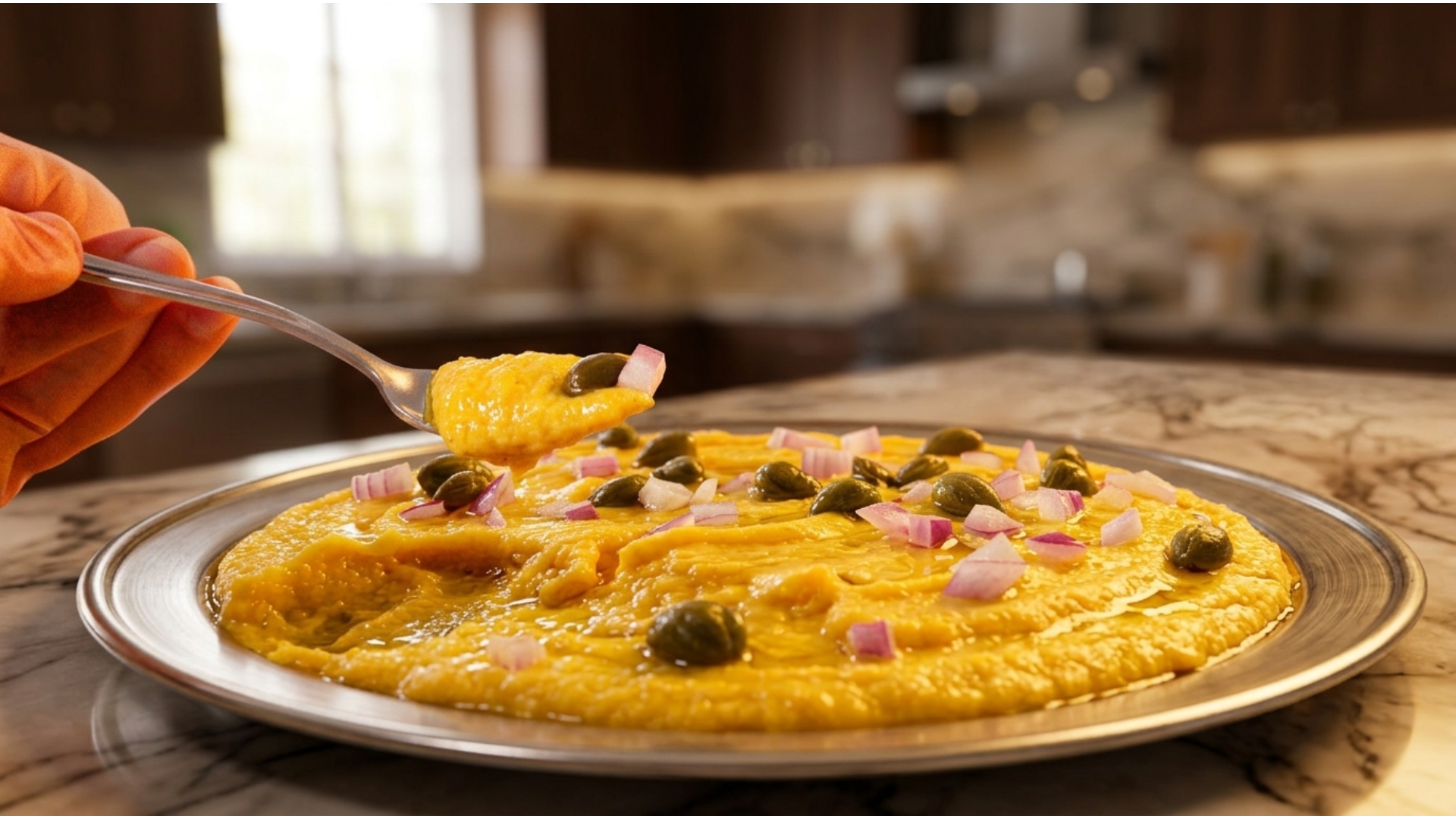
Simple, naturally vegan, and full of Mediterranean flavor, it’s delicious served with fresh red onion, capers, a drizzle of extra virgin olive oil, and a squeeze of lemon.
Whether you enjoy it as an appetizer, a dip with crusty bread, or a side dish alongside your favorite meal. Greek Fava is a wonderful example of how a few humble ingredients can create something truly delicious.
Why You’ll Love This Recipe
- Smooth and velvety texture: Slowly cooked yellow split peas are blended with olive oil and lemon juice to create a wonderfully creamy purée.
- Simple, wholesome ingredients: Made with yellow split peas, fresh vegetables, olive oil, and a few basic seasonings, this traditional Greek dish proves that delicious food doesn’t need to be complicated.
- Naturally vegan and nutritious: Rich in plant-based protein and fiber, Greek Fava is a satisfying choice for anyone who enjoys wholesome Mediterranean cooking.
- Full of authentic Greek flavor: The combination of olive oil, garlic, oregano, and fresh lemon gives this simple dish its distinctive Mediterranean character.
- Versatile and easy to serve: Enjoy it as an appetizer with crusty bread, as a dip, or as a delicious side dish. Top it with fresh red onion and capers, or try caramelized onions for a sweeter twist.
My Tips for the Perfect Greek Fava
- Give the split peas a quick soak: Let the yellow split peas soak in water for approximately 10 minutes while you prepare the vegetables. Rinse and drain them thoroughly before adding them to the pot.
- Sauté the vegetables first: Cooking the onion and carrots briefly in olive oil helps develop their natural sweetness and gives the fava a richer flavor.
- Skim off the foam: As the split peas begin to cook, remove any foam that rises to the surface for a cleaner, smoother result.
- Keep the heat low: Let the fava simmer gently until the split peas are completely tender. Stir more frequently toward the end, as the mixture thickens and can stick to the bottom of the pot.
- Blend until velvety: Use an immersion blender to create a smooth, creamy purée. Adding the lemon juice and remaining olive oil after blending gives the fava a lovely finishing touch.
- Don’t forget the toppings: Fresh red onion, capers, and a drizzle of extra virgin olive oil provide a wonderful contrast to the creamy texture. For a sweeter variation, try serving it with caramelized onions.
Watch the Video Recipe
Want to see how to make traditional Greek Fava at home?
Watch my step-by-step video below to see how to prepare the yellow split peas, cook them until tender, and blend everything into a beautifully smooth and creamy purée.
Traditional Greek Fava Recipe (Yellow Split Pea Purée)
Ingredients
Method
- Prepare the split peas: Place 500 g of yellow split peas (Greek fava) in a large bowl. Add 500 ml of water, stir well, and set aside while preparing the vegetables.
- Prepare the vegetables: Peel and roughly slice 2 medium carrots. Roughly chop 1 medium onion.
- Sauté the vegetables: Heat 30 ml of extra virgin olive oil in a pot. Add the chopped onion and carrots and sauté for 3–4 minutes, until slightly softened.
- Season and add the water: Season with salt and black pepper to taste, then pour in 1 litre of water.
- Rinse and drain the split peas: Thoroughly rinse and drain the soaked split peas, then add them to the pot with the vegetables.
- Add the garlic and oregano: Cut 1 large garlic clove into chunks and add it to the pot, along with 1 teaspoon of dried oregano. Stir to combine.
- Skim and simmer: Allow the mixture to simmer gently and skim off any foam that rises to the surface. Reduce the heat to low and simmer for approximately 30 minutes, until the split peas are completely soft and tender.
- Stir towards the end: As the fava thickens, stir frequently, especially towards the end of cooking, to prevent it from sticking to the bottom of the pot and burning.
- Blend until creamy: Remove the pot from the heat. Using an immersion blender or food processor, blend the mixture until completely smooth and velvety.
- Add the lemon and olive oil: Squeeze in the juice of half a lemon and add 2 tablespoons of extra virgin olive oil. Stir thoroughly until fully incorporated.
- Garnish and serve: Transfer the fava purée to a serving plate and top with finely chopped red onion and capers. Finish with a generous drizzle of extra virgin olive oil and serve.
How to Serve Greek Fava
Greek Fava can be enjoyed hot or cold, making it a versatile appetizer or side dish for any occasion.
For a classic Greek presentation, spread the fava onto a serving plate, top with finely chopped red onion and capers, and finish with a generous drizzle of extra virgin olive oil.
If you prefer a milder, sweeter flavor, try replacing the raw onion with caramelized onions. They add a delicious contrast to the earthy taste of the yellow split peas.
Serve your Greek Fava with fresh crusty bread, warm pita, or alongside grilled fish and seafood. It’s also a wonderful addition to a table filled with traditional Greek meze dishes.
Kali Orexi! (Καλή Όρεξη!)